
Key Takeaways
- Seven core OPEC+ members agreed to a 188,000 bpd production increase starting June 2026.
- The UAE officially exited OPEC+ on May 1, 2026, seeking independent control over its 5 million bpd capacity goal.
- The ongoing blockade of the Strait of Hormuz makes any output boost largely symbolic until shipping routes reopen.
- The IEA has revised demand forecasts downward by 730,000 bpd, signaling potential long-term price headwinds.
In a move that feels both calculated and curiously detached from the chaos on the ground, seven core members of the OPEC+ alliance announced on May 3, 2026, that they would begin a modest unwinding of production cuts. This decision, emerging from the Joint Ministerial Monitoring Committee (JMMC), arrives at a moment of unprecedented structural transformation for the oil market.
The Numbers: A Symbolic 188,000 Barrels
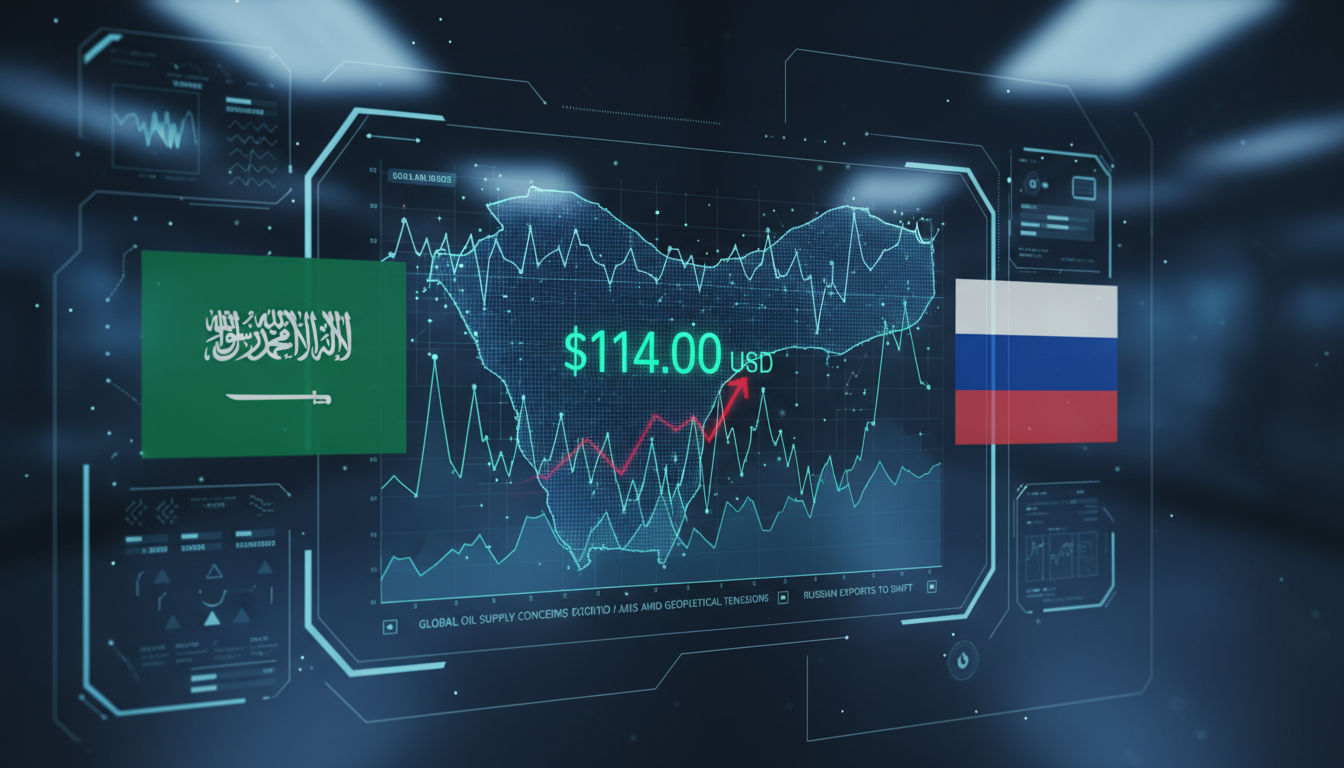
The "Seven" nations—led by Saudi Arabia and Russia, and rounded out by Iraq, Kuwait, Kazakhstan, Algeria, and Oman—have agreed to a production hike of 188,000 barrels per day (bpd) starting in June. On paper, this is a signal to global markets that the cartel is ready to reclaim market share. In reality, with Brent crude hovering around $114 and WTI clearing $105, the market barely blinked. The 188,000 bpd figure is essentially a partial reversal of the voluntary cuts initiated in early 2023, but it faces a wall of physical and geopolitical limitations.
The UAE-Sized Hole in the Alliance
The most striking backdrop to this decision is the empty chair at the table. On May 1, 2026, the United Arab Emirates (UAE) officially terminated its membership in OPEC+, ending a 65-year alliance. The UAE is now a wild card, aggressively pursuing a 5 million bpd capacity target by 2027. For investors, the UAE’s departure signals a shift from coordinated price floors to a "sovereignty first" model. While the remaining OPEC+ members are attempting to show a united front, the loss of the UAE’s spare capacity and diplomatic weight cannot be overstated.
The Hormuz Chokehold
Perhaps the biggest reason the production hike feels symbolic is the ongoing blockade of the Strait of Hormuz. With Iran currently maintaining a military chokehold on the waterway, roughly 20% of the world’s oil and gas trade is effectively trapped. Adding 188,000 bpd to the global ledger matters very little if those barrels cannot physically reach a tanker. As long as the U.S.-Israeli-Iran conflict keeps the world’s most vital energy artery pinched, the "Seven" are essentially adding supply to a pipeline that is currently capped at the exit.
Demand Destruction and the IEA’s Warning
While OPEC+ focuses on supply, the International Energy Agency (IEA) is sounding the alarm on demand. The IEA recently slashed its 2026 demand forecast by 730,000 bpd—the steepest contraction since the pandemic. High prices are finally doing what high interest rates couldn't: killing fuel use. We are seeing a classic case of demand destruction in emerging markets, which creates a precarious situation for investors. If the conflict in the Middle East resolves suddenly and the Strait reopens, the combination of an OPEC+ boost and falling global demand could lead to a rapid price correction.
Trust & Source Information
Transparency & Trust
At Fox Energy, we provide direct analysis for accredited investors based on live market data and geopolitical intelligence. This report was authored by Founder Christian Rosenblum and reviewed by our editorial team to ensure accuracy in a volatile $110+ oil environment.
Sources: International Energy Agency (IEA) 2026 Demand Outlook; OPEC Secretariat Ministerial Briefings; JMMC Compliance Reports (May 2026).
Frequently Asked Questions
Which countries are part of the 'Seven' increasing production?
The nations participating in this specific unwinding of voluntary cuts include Saudi Arabia, Russia, Iraq, Kuwait, Kazakhstan, Algeria, and Oman.
Why did the UAE leave OPEC+?
The UAE sought to capitalize on its massive investments in spare production capacity, which were previously restricted by OPEC+ quotas. By leaving, they gain the flexibility to hit their 5 million bpd target by 2027.
What is the 'compensation' mechanism?
It is a requirement by the JMMC that members who overproduced in previous months (like Iraq and Kazakhstan) must make additional cuts to maintain the cartel's credibility.
Written by
Christian Rosenblum
Managing Editor