
Key Takeaways
- Renewed military tensions between the U.S. and Iran have compromised the security of the Strait of Hormuz.
- The collapse of the June MOU has reintroduced a substantial 'war premium' to global oil prices.
- OPEC has downgraded its 2026 demand growth forecast, signaling broader economic fragility.
- Investors are rotating capital away from technology stocks and into the energy sector as a hedge against supply-driven inflation.
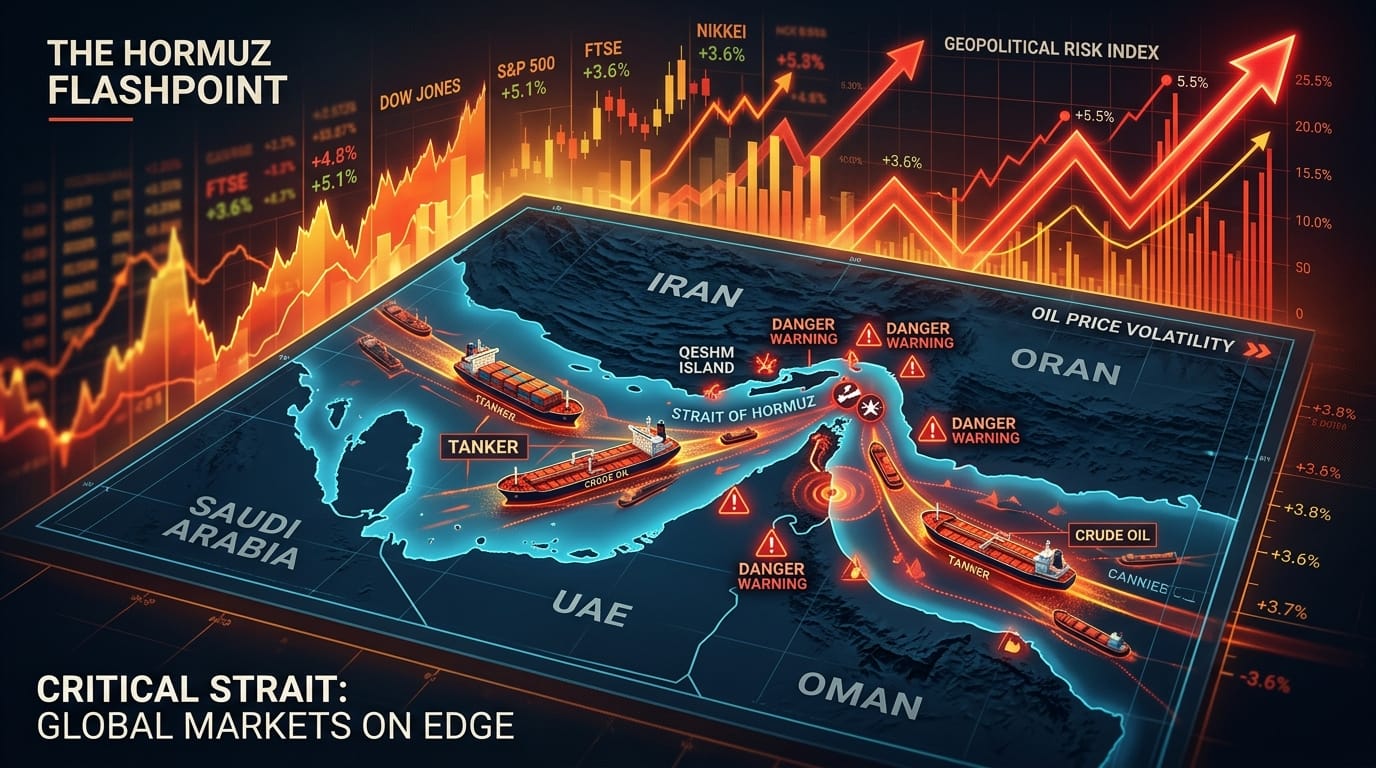
Global oil markets are facing a sharp increase in price volatility this week as geopolitical tensions in the Middle East escalate once again. Following the sudden collapse of June's memorandum of understanding, the Strait of Hormuz—a critical artery for global oil supply—has become the epicenter of a renewed military confrontation between the United States and Iran.
The War Premium Returns
Traders were largely caught off guard by the rapid reversal of stability in the region. President Trump's recent directive to reinstate a blockade on Iranian vessels and impose transit fees has effectively reintroduced a significant "war premium" to oil prices. As military strikes occur along the chokepoint, the market is pricing in immediate supply constraints, overshadowing the production gains witnessed just last month.
Economic Ripples and Investor Sentiment
The geopolitical chaos comes at a challenging time for the broader economy. OPEC recently issued its third consecutive downgrade to its 2026 global oil demand growth forecast, citing persistent economic instability. Federal Reserve officials have signaled concern that spiking energy prices, coupled with existing tariff frameworks, could push core inflation well beyond the 2% target, potentially forcing the hand of monetary policymakers.
For investors, this marks a distinct rotation. While tech and semiconductor stocks have faced downward pressure due to a growing "risk-off" sentiment, the energy sector is currently serving as a hedge. As supply chains face potential disruptions, capital is shifting toward traditional energy assets, moving away from the tech-heavy portfolios that defined the first half of 2026.
Looking Ahead
The central question facing the market is not just the immediate price action, but the longevity of this disruption. If the Strait of Hormuz remains a contested zone, the shift from a temporary supply squeeze to a prolonged period of energy inflation appears increasingly likely. Investors should monitor developments in maritime security closely, as the reliability of this route remains the single largest factor in the current global supply equation.
Frequently Asked Questions
Will the Strait of Hormuz remain open for oil transit?
The status of the Strait remains highly uncertain. With both the U.S. and Iran engaged in active military maneuvers and implementing blockade measures, its functionality is currently at risk, making it the primary concern for global supply chain stability.
How does this conflict affect long-term energy inflation?
Federal Reserve officials are concerned that rising oil prices, exacerbated by current geopolitical tariffs and supply constraints, may keep core inflation elevated above the 2% target for a longer duration than initially projected.
Written by
Jason Gilbert
Founder & CEO, Fox Energy Partners