
Key Takeaways
- The 'Rockets and Feathers' effect explains why gas prices rise quickly but fall slowly.
- Retailers price gasoline based on 'replacement cost' rather than the cost of current inventory.
- Shipping insurance premiums can spike 400% during Middle East conflicts, adding hidden costs to crude.
- US refinery specs require heavy/sour crude, maintaining a dependency on Middle East stability despite domestic production.
- Physical inventory lag means it takes 2-4 weeks for oil price changes to reach the retail pump.
The Economic Friction: Why the Pump Doesn't Mirror the Ticker
We’ve all seen the headline: "Middle East Peace Talks Show Progress, Brent Crude Drops 4%." You drive to your local gas station expecting a discount, only to see the same $3.65 on the sign that was there yesterday. It’s frustrating, and to the average consumer, it feels like price gouging. But for energy investors, this disconnect is a predictable outcome of market mechanics known as asymmetric pass-through.
The reality is that while oil futures trade in milliseconds, the liquid in your tank moves through a multi-week supply chain of tankers, pipelines, refineries, and trucks. When geopolitical tensions in the Middle East—specifically around the Strait of Hormuz—fluctuate, the futures market reacts to the potential for disruption. The retail market, however, reacts to the replacement cost of the next shipment.
The 'Rockets and Feathers' Phenomenon
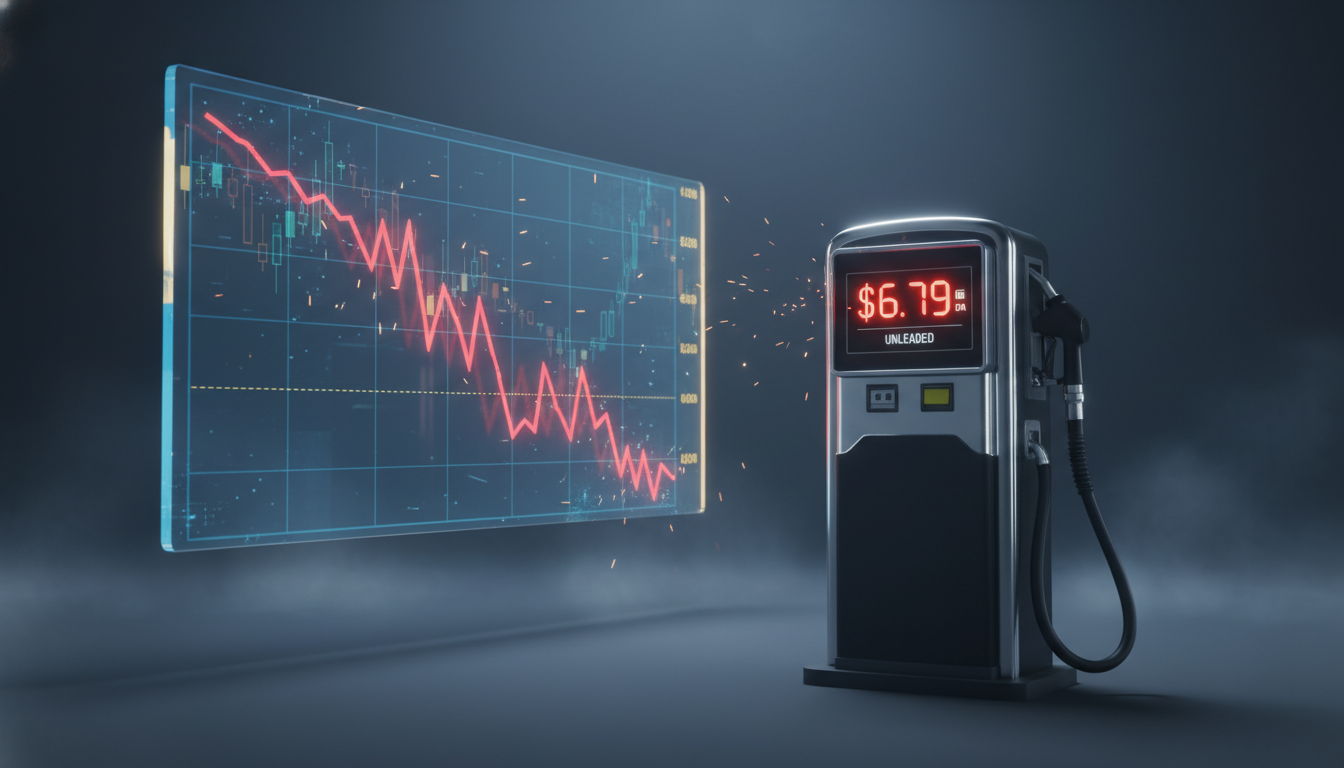
Economists have a colorful name for this: "Rockets and Feathers." When crude oil prices spike due to war or supply shocks, retail gas prices tend to shoot up like a rocket. When crude prices fall due to peace talks or increased production, retail prices drift down slowly like a feather.
Why the Asymmetry?
- Replacement Cost Accounting: Gas station owners aren't pricing based on what they paid for the fuel currently in their underground tanks. They price based on what it will cost to buy the next load. If global volatility suggests prices could spike again, they keep retail prices high to ensure they have enough cash to buy the next delivery.
- Inventory Turnover: The average gas station has about 3 to 5 days of inventory. However, the wholesale "rack" prices they pay are influenced by regional refinery production and storage levels, which have much longer lag times (often 2-4 weeks).
- Margin Recovery: Retailers often lose money or operate on razor-thin margins when prices spike. When prices finally drop, they use the "feather" period to recoup those lost margins before competition forces them to lower prices.
The Geopolitical Friction: The Strait of Hormuz and the War Premium
Even when a peace treaty is signed or a ceasefire is announced, the global energy market doesn't just reset to zero. About 20% of the world’s liquid petroleum passes through the Strait of Hormuz. When tensions flare, tanker insurance premiums can spike by as much as 400%. These costs are baked into the seaborne crude trade and take weeks to unwind after a conflict subsides.
Furthermore, the US might be a net exporter of oil, but our refineries are specifically calibrated for "heavy/sour" crude from the Middle East and South America, while our domestic production is mostly "light/sweet" crude. This means we are still fundamentally tied to Middle East stability to keep our refineries running at peak efficiency.
The Refining Bottleneck: Why Crude Volume Isn’t Gasoline Availability
You can have a sea of crude oil, but if the "kitchens" (refineries) are full or undergoing maintenance, the price of gasoline won't budge. This is known as refining margins or the "crack spread." During periods of Middle East volatility, refineries may shift their buying patterns or slow down production due to shipping delays, creating a physical shortage of finished gasoline that persists even after the geopolitical news turns positive.
The 'Balloons and Rocks' Counter-Theory
While "Rockets and Feathers" is the norm, it's worth noting the "Balloons and Rocks" scenario. During extreme economic recessions (like 2008 or 2020), demand collapses so fast that prices drop like rocks while the rest of the economy stays inflated. Unless we see a massive demand destruction event, investors should expect the current lag to persist throughout the 2025-2026 cycle.
Investor Outlook: Navigating the Lag
For accredited investors looking at direct participation in oil and gas, understanding this lag is critical. Volatility at the pump is often a lagging indicator of the health of the upstream sector. While the consumer sees a delay in relief, the producer and the well-head investor often capture the "war premium" far more efficiently. At Fox Energy, we focus on the upstream fundamentals that capitalize on these global price swings before they ever reach the local gas station sign.
Frequently Asked Questions
Why do gas prices go up the same day oil prices rise?
Does the US produce enough oil to be independent of the Middle East?
How does the Strait of Hormuz affect local US gas stations?
Written by
Jason Gilbert
Founder & CEO, Fox Energy Partners