
Key Takeaways
- The total North American rig count fell due to a sharp seasonal drop in Canada.
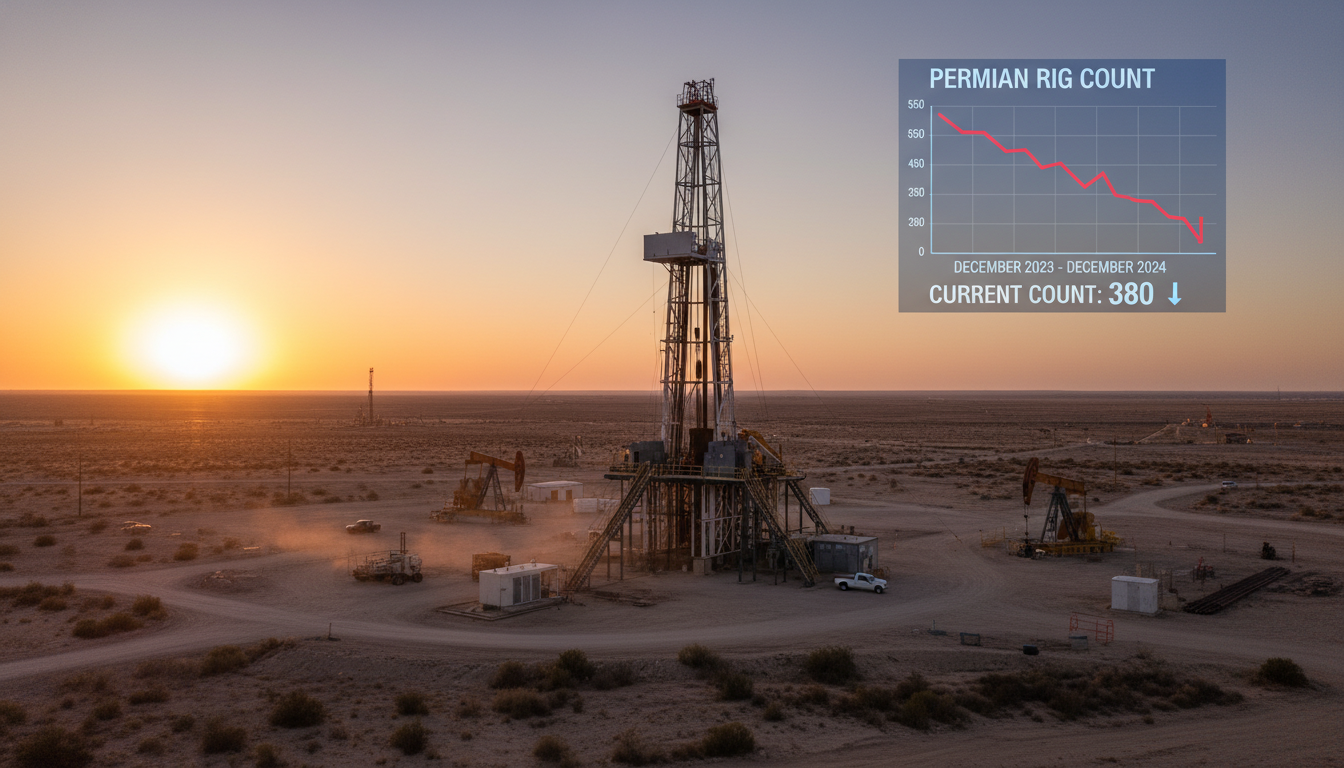
- The U.S. rig count remains approximately 6% lower year-over-year despite high oil prices.
- Efficiency gains allow production to remain stable for now, but long-term supply could be impacted.
- Producers are prioritizing dividends and debt reduction over aggressive new drilling.
- The rig count is a critical leading indicator for future supply and the steel industry (OCTG).
The latest data from the Baker Hughes North America Rotary Rig Count has sent a ripple of caution through the energy markets. After a brief period of stabilization, the overall North American rig count has returned to negative territory. While the U.S. managed a modest uptick in drilling activity during the first week of May 2026, a significant seasonal contraction in Canada dragged the continental total lower, underscoring the ongoing volatility in the upstream sector.
The Tale of Two Borders
To understand the current drilling landscape, you have to look at the divergence between the U.S. and Canadian markets. In the United States, we saw a minor increase in active rigs, led primarily by activity in the Permian Basin. However, this growth remains fragile. The U.S. rig count is still down approximately 6% year-over-year, reflecting a broader trend of capital discipline among domestic producers.
Meanwhile, Canada is experiencing its annual "spring breakup." This seasonal phenomenon occurs when the ground thaws, making it difficult for heavy equipment to navigate soft roads and remote drilling sites. While expected, the depth of this year's drop has analysts at firms like TD Cowen and J.P. Morgan questioning if there’s an underlying economic cooling beyond the mud.
The Efficiency Paradox
One of the most frequent questions I get from investors is: "If the rig count is dropping, why is production still hitting records?" It comes down to drilling efficiency. Modern rigs are faster, and horizontal laterals are longer than they were just three years ago. We are seeing more barrels of oil equivalent (BOE) per foot drilled than ever before.
However, there is a limit to how much efficiency can mask a declining rig count. The rig count is a leading indicator. A loss of rigs today typically predicts a supply pinch 6 to 12 months down the line. If the U.S. count doesn't see a sustained recovery, the EIA projections for 2027 output may need a significant downward revision.
Capital Discipline vs. Triple-Digit Oil
With WTI hovering around $102, the old playbook would suggest a massive drilling spree. But this isn't 2014. Today’s exploration and production (E&P) companies are laser-focused on debt reduction and returning capital to shareholders through dividends. The United States Oil Fund (USO) and other investment vehicles are tracking this closely, as the industry prioritizes financial health over raw volume growth.
Regional Highlights
- Permian Basin: Remains the resilient heart of U.S. oil, maintaining the lion's share of active rigs.
- Haynesville: Natural gas activity remains stagnant despite higher demand forecasts, as producers wait for more LNG export capacity to come online.
- Eagle Ford: Seeing modest consolidation as mid-sized players focus on core acreage.
For accredited investors, this environment requires a surgical approach. The "losing rigs" headline isn't necessarily a signal of industry distress, but rather a sign of a mature, disciplined market that is no longer chasing growth at any cost. At Fox Energy, we continue to monitor these shifts to identify where the most efficient operators are positioning themselves for the next cycle.
Frequently Asked Questions
What is the 'spring breakup' in Canada?
Why does production stay high if the rig count is falling?
What does a lower rig count mean for the steel industry?
Written by
Christian Rosenblum
Managing Editor