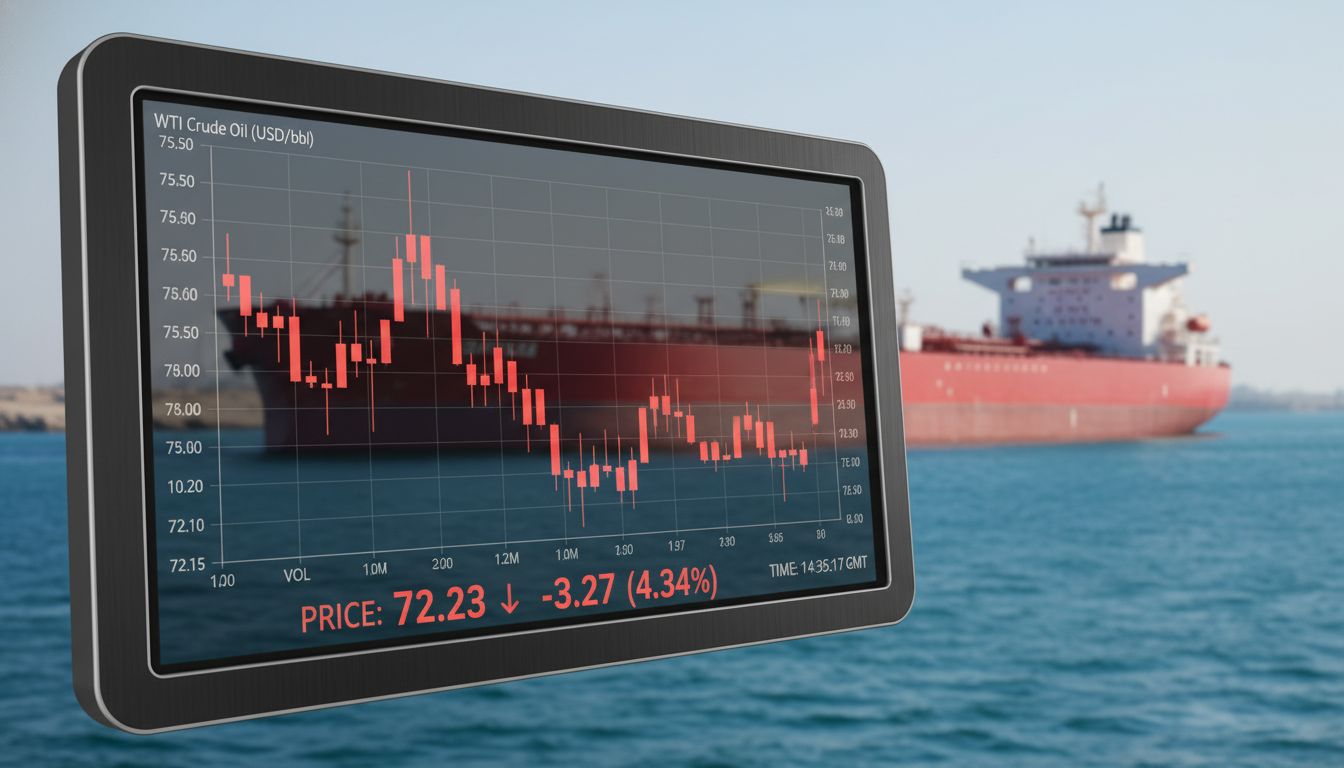
Crude Closes Down for Third Day as Diplomatic Hope Battles Supply Reality
Diplomatic optimism is trimming the 'Hormuz Premium,' but record inventory draws suggest the market equilibrium remains incredibly fragile.
Jason Gilbert
Founder & CEO, Fox Energy Partners
Key Takeaways
- Crude prices fell for a third consecutive day due to optimism surrounding a US-Iran ceasefire.
- The Strait of Hormuz remains 95% closed, resulting in a global inventory draw of ~14 million barrels per day.
- Analysts estimate a $5–$15 'geopolitical risk premium' is currently being priced out of the market.
- UAE's recent exit from OPEC (May 1, 2026) continues to add structural uncertainty to global supply forecasts.
- US gas prices at $4.56/gallon are raising concerns of demand destruction ahead of Memorial Day.
Oil markets are currently caught in a high-stakes tug-of-war between the physical reality of empty storage tanks and the psychological weight of diplomatic headlines. For the third consecutive session, crude oil prices finished in the red on May 21, 2026, as traders tentatively priced in a potential de-escalation of the conflict between the United States and Iran.
The "Hormuz Premium" Under Fire
The primary driver behind this three-day slide is a surge in diplomatic optimism. U.S. President Donald Trump has signaled that a peace deal may be within reach, a sentiment echoed by Secretary of State Marco Rubio, who cited "encouraging signs" from Pakistani-mediated talks. For investors, this represents the potential removal of the "geopolitical risk premium"—estimated by analysts at Goldman Sachs to be between $5 and $15 per barrel.
However, the market remains on a knife-edge. While the diplomatic rhetoric is softening, Iranian President Masoud Pezeshkian has maintained a dual-track approach, stating that Iran "won’t back down" on core sovereignty terms even as negotiators meet. This "head-fake" risk has kept volatility high; we’ve seen similar truces fail to materialize since April.
Physical Supply vs. Market Sentiment
Despite the price drop, the physical backdrop remains arguably the most bullish in history. The Strait of Hormuz, which traditionally handles 20% of global supply, remains effectively paralyzed with a 95% reduction in traffic. The world is currently burning through inventories at a staggering rate of 14 million barrels per day from the Persian Gulf alone.
“We are seeing a fragile equilibrium,” says Jason Gilbert, Founder of Fox Energy. “The market is desperate for a reason to sell off because the inflationary pressure is becoming unbearable for the global economy. But you can’t print oil. Even if a deal is signed tomorrow, shipping lanes won’t return to normalcy until late 2026 or 2027.”
The UAE Factor and Demand Destruction
Adding to the complexity is the recent departure of the UAE from OPEC on May 1. This shift has introduced a wildcard into production strategies, as Abu Dhabi seeks to maximize its own export capacity outside of the cartel’s quotas. Meanwhile, in the U.S., gas prices at $4.56 a gallon are beginning to trigger "demand destruction" concerns as we head into the Memorial Day weekend.
If consumer pull-back coincides with a breakthrough in the Atlantic Basin—specifically increased exports from the U.S., Brazil, and Canada—the current slide could turn into a more significant correction. For now, the market is betting on diplomacy, but the underlying inventory deficit suggests that any rally could be just one failed meeting away.
Source Block: Data compiled from Bloomberg Intelligence, EIA weekly inventory reports, IEA global supply forecasts, and White House press briefings dated May 19–21, 2026.
For more on how these shifts affect private energy placements, see our analysis on The UAE's OPEC Exit Strategy and Navigating the 2026 Inventory Crisis.
Frequently Asked Questions
How long will it take for the Strait of Hormuz to reopen?
Even if a diplomatic deal is finalized immediately, maritime experts suggest that clearing mines and restoring full commercial confidence will prevent shipping traffic from returning to pre-conflict levels until at least late 2026 or 2027.
Why is the UAE leaving OPEC significant?
The UAE's departure allows them to increase production and export volumes independently of OPEC quotas, potentially providing a much-needed supply buffer, though it also signals a fracturing of the traditional energy alliance.
Jason Gilbert
Founder & CEO, Fox Energy Partners